Some people believe that being a leader is pretty easy, all they need to do is set the rules for others to follow. But what these people don’t realize is that leadership is way beyond that.
Great leaders are equipped with special ethics that guide them through the journey. How important are these ethics?
A well-known financial company had to pay $185 million in fines as a result of unethical transactions. Creating over 2 million unauthorized accounts did not only cost the company lots of money but also its reputation.
All these would have been avoided with the right leader, so if you ask me ethical leadership is crucial for the survival of any company or organization.
Ethics are essential to leadership, they are what distinguishes you from just any other person.
Nurturing an environment of trust, respect, and accountability should be the goal of every leader and it is achievable by practicing ethical leadership in all management sectors.
Dear friends, your ethics should not only be demonstrated when you are being watched or in the spotlight but all the time and over time.
Being an ethical leader may be unpleasant as most times your integrity takes priority over emotions. Just as the author Andrew Leigh mentioned in his book “to be an ethical leader is indeed difficult” because even after acknowledging the complexity of leading, you do it anyway.
Ethical leaders demonstrate appropriate conduct following recognized principles and values both inside and outside of their jurisdiction. They act according to a set of principles and values that are recognized by the majority as a sound basis for the general good.
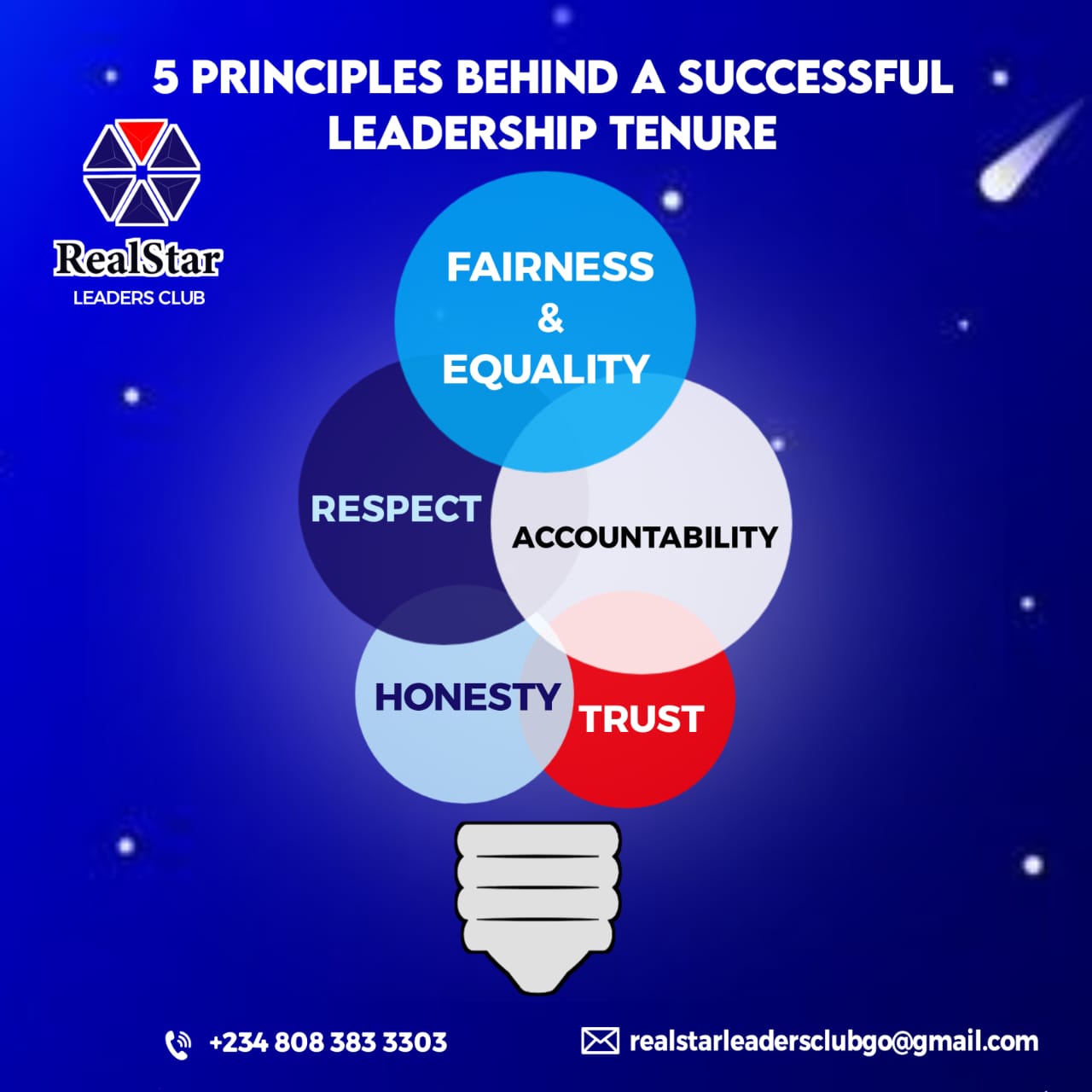
Some principles need to be followed to effectively practice and understand what ethical leadership means. These principles include;
Fairness and Equality:
The Bible says in Matthew 7:12 that we should treat others the way we expect to be treated and this is why fairness is a core ethical leadership attribute.
No one wants to be treated unequally and as a well-rounded leader, there is no room for favoritism or discrimination. Your subjects must be equally treated in favor and punishment.
Accountability:
Nobody is above mistakes or poor decisions but being accountable for every decision is proof of a strong and responsible leader.
Trust:
This is one important attribute of ethical leadership. As a leader, you can expect to build a great team or community without trust as its foundation.
Honesty:
Honesty creates an environment where every member of the team can effectively communicate important issues. Honesty is the breeding ground for trust, because without honesty then trust cannot thrive.
Respect:
We enjoy the privilege of being opinionated and this means you might not always agree with the person next to you. And respect is showing regard for the other person’s feelings, wishes, or beliefs regardless of what you may think.
The road to success is a rocky one and the skills ethical leaders possess are necessary for this quest.
Dear friends, it is time we give ethical leadership a chance. Until we come your way again remember that you have all it takes to be a great leader.